by
Volodymyr Holod  Footy Stories
1st April 2025
In recent years, Lviv football has changed beyond recognition. Yes, Karpaty are back in the Premier League. Yes, FC Lviv has disappeared from the football map again. Yes, Rukh is still looking for its identity. But we thought it would be interesting to present the original article from 2021. After all, you already know the end of this story and the current state of affairs.
Lviv is not just an ordinary Ukrainian city. Its spirit contains somewhat more than Soviet and Polish past. Founded in the 13th century by King Danylo, Lviv was a part of many countries, like the medieval Kingdom of Galicia–Volhynia or more recent Austria-Hungary, Poland and Soviet Union. Every ruler brought to Lviv something new – sometimes good, sometimes not. During the 19th century, Polish athletes brought us football – an unknown game that soon became an integral part of the city’s life. After the first match between Lviv and Kraków sides (1-0 victory for Lviv), numerous clubs emerged in different Lviv communities – from the Polish majority to a Jewish and Ukrainian minorities. At the start of the 20th century, the city was filled with new clubs. The most prominent Lviv sides – Jewish Hasmonea, Polish Lechia, Pogoń and Czarni – played in the national top division. Pogoń even won four league titles between 1922 and 1926.
In 1939 the Soviet army occupied Lviv and brought its football traditions with it. As you might expect, the new clubs had Russian names – Spartak and SKA. Ukrainians had to wait for a proper Ukrainian club until 1963, when Karpaty Lviv were formed. The new club had a lot of love, starting from a glorious new 40,000 stadium that was literally built by the whole city. In 1969 Karpaty showed the entire country their strengths in the Cup competition. After several narrow victories, our club became a proper giant-killer, making it to the final match at Moscow’s Luzhniki. This unlikely success of the lower-division side caused some kind of national revival among Ukrainians. One of the most passionate fans spent one month getting to Moscow by foot – almost 800 miles had ruined three pairs of his shoes!
It was the meeting of two worlds – Russian rulers (SKA Rostov-on-Don) and Ukrainian underdogs. Western Ukrainians never were Soviet people. Our parents knew some ways of avoiding it – Lviv was the city of underground culture (like the hippies movement) and the city where people secretly listened to forbidden radio stations, such as "Voice of America" or "Radio Liberty". So this Cup final meant much more than a chance to win the trophy.
SKA scored the first goal of the match, but Karpaty scored twice in the second half to secure the victory. Before kick-off, SKA players half-jokingly offered their Ukrainian rivals to buy second-hand boots from them, and now they were beaten by an unknown Lviv side. It was a moment of great togetherness. The next day it looked like the whole city had come to the airport to meet their heroes. “People broke the fence and started to run to the plane,” said Karpaty captain Ihor Kulchytskyi. “It took us two hours to get to the city centre! We were giving autographs to everyone… We even put autographs on banknotes and Communist Party membership cards!” In 1970, Karpaty made their debut in the Cup-Winners Cup and finally gained promotion to the top flight. Eight seasons among the best teams brought some more outstanding achievements, such as a memorable victory against Dynamo Kyiv or two finishes on the 4th place. In 1982, Soviet authorities merged Karpaty with SKA Lviv – the result was a soulless club that never was as popular as the original Karpaty.
Due to the demand of the local population, Karpaty was brought back to the national competitions in 1989. In 1992, Karpaty started their way in the Independent Ukraine. Since then, our club played some notable matches, such as Europa League games against Borussia Dortmund, Paris Saint-Germain, Sevilla and Galatasaray in 2010. The qualification matches against the pedigree Turkish side were arguably the best ones we’ve seen after that 1969 Cup success. After drawing 2-2 draw in Istanbul, we needed just another draw in Lviv. With one minute to play the score was 0-0, but then Galatasaray scored. However, despair turned to euphoria after 94th minute goal from our defender Artem Fedetskyi. That goal gave us our only appearance at the Europa League group stage.
In recent years, new football "kids on the block" arrived. The second big club, FC Lviv, was formed in 2006 and gained promotion to the Premier League in 2008. However, their stay there was short lived – they were relegated after just one season. After a few seasons in the First League, FC Lviv folded. Currently, a brand new club with similar name – PFC Lviv – competes in the Ukrainian Premier League. Curiously, they never won a promotion – PFC Lviv gained their place in the top division after swapping places with Veres Rivne.
The third prominent Lviv club is Rukh. Founded in 2003 in Vynnyky (few miles from Lviv), they are owned by a major local businessman who moved the club to Lviv in 2019. The club currently competes in the Premier League, making some noise in social media and on the transfer market (they signed Ragnar Sigurðsson, one of the Iceland national team stars). Thankfully to their media activity and the recent decline of Karpaty, Rukh attracted many neutral fans. At the moment, Lviv is a proper football city. Despite low attendances, the city has three professional clubs: PFC Lviv and Rukh in the Premier League and Karpaty in the Second League (they were moved two divisions below by the federation). Two clubs without history and fans compete among the country’s best teams, while Karpaty with its long history have to claw their way back to the top flight.
Inevitably, Lviv football fans will be divided into three groups: some will support Karpaty (as their parents and grandparents did), some will be attracted to the glitz of the Premier League while the third (and largest) group will use every opportunity to watch live football.
opinions
13-05-2025
While we are watching the clumsy and frightening moves of the United States in world politics, which are finally destroying the existing world order, something quite the opposite has happened on the football field. The wonderful and majestic America was momentarily brought back to reality. It was football again - in all its glory.
football culture
01-04-2025
In the late 1980s, English football was far from what we see it as now. It wasn’t the shining giant. It wasn’t the magnet for the best players and the biggest money. There was no Premier League yet, but there were disasters at Heysel and Hillsborough. There was hooliganism. Football was going from being the nation’s favourite child to being a despicable outcast. England itself became an outcast when its clubs were banned from European competitions for several years. English football was shrouded in a depressing atmosphere.
soccer tales
13-05-2025
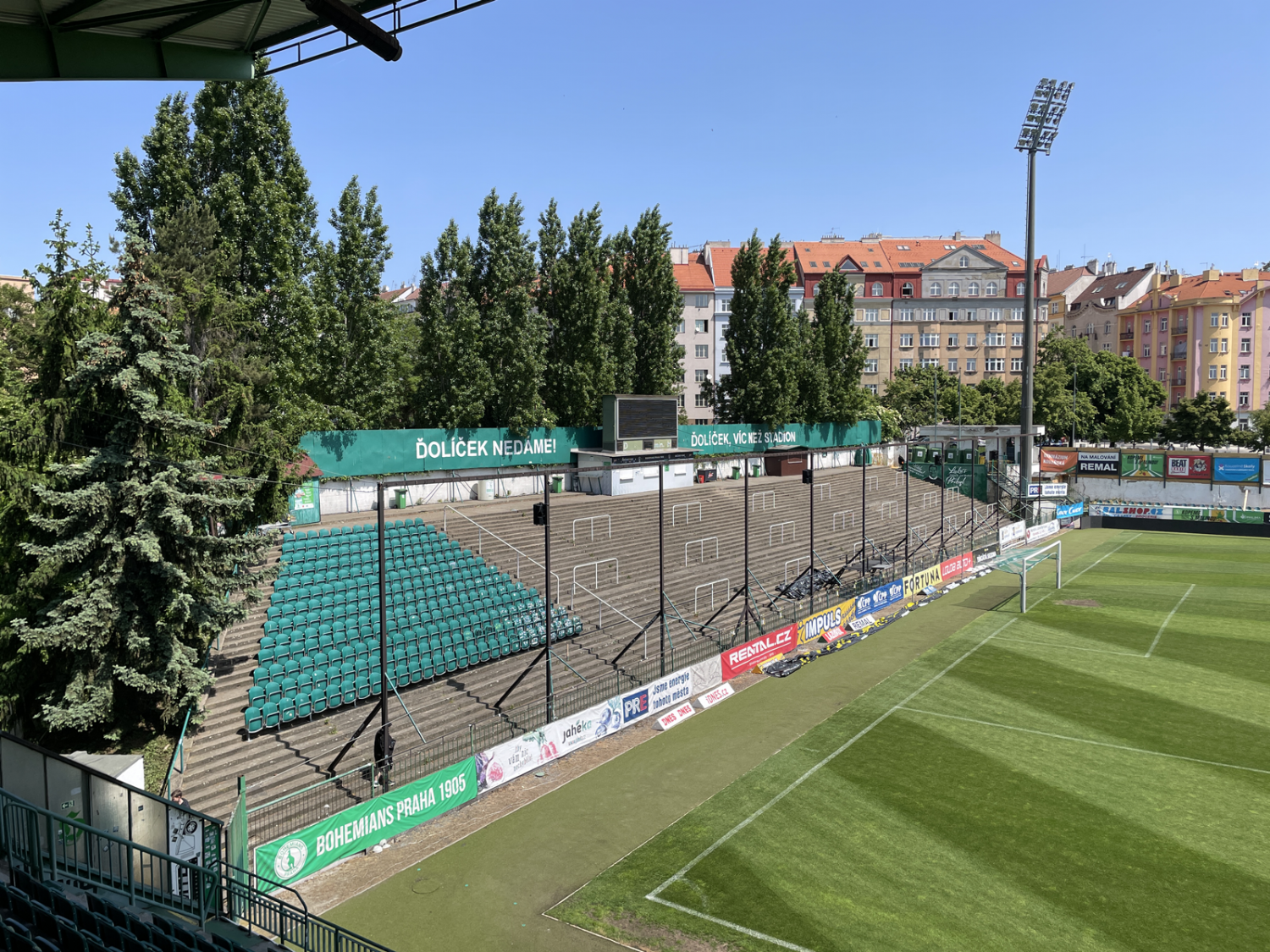
The story of Prague's unorthodox Dolicek Stadium